
Understand How Children Develop a Sense of Right and Wrong – Simplified for CTET CDP
🌟 Short Introduction
Why do children tell the truth — is it fear of punishment or belief in fairness?
That’s exactly what Lawrence Kohlberg wanted to understand through his Theory of Moral Development.
In CTET, questions from this topic test your ability to connect psychology with classroom behavior.
🎯 This guide simplifies Kohlberg’s stages, connects them to CTET pedagogy, and ends with practice questions you’ll actually remember.
🧠 Understanding Kohlberg’s Theory
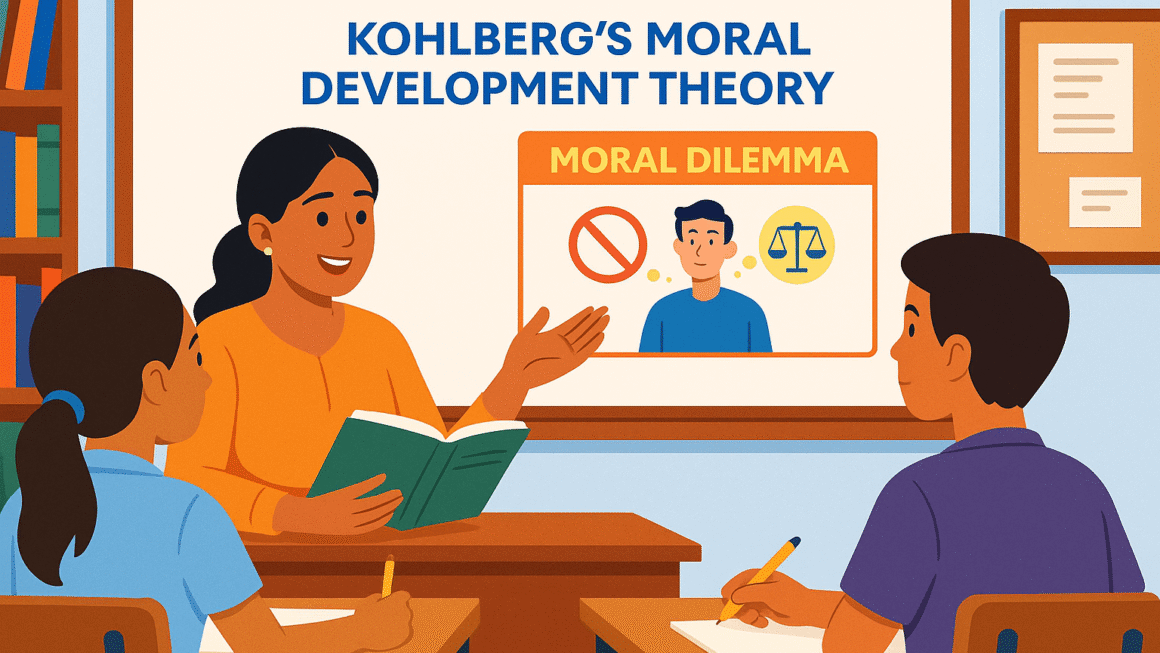
Lawrence Kohlberg extended Piaget’s work on moral reasoning and proposed three levels of moral development, each divided into two stages.
He believed moral growth happens when individuals face moral dilemmas — situations where choosing right vs wrong isn’t easy.
| Level | Stage | Moral Focus | Classroom Example (CTET-Relevant) |
| Level 1: Pre-Conventional | Stage 1: Obedience & Punishment Orientation | Child follows rules to avoid punishment. | A student doesn’t cheat because the teacher might scold him. |
| Stage 2: Individualism & Exchange | Right behavior = what benefits me. | “I’ll help my friend if he helps me.” | |
| Level 2: Conventional | Stage 3: Good Interpersonal Relationships | Seeks approval, wants to be seen as good. | A child shares lunch to be liked by classmates. |
| Stage 4: Maintaining Social Order | Obeys rules to keep order and respect authority. | Student follows class rules because “rules are important for everyone.” | |
| Level 3: Post-Conventional | Stage 5: Social Contract & Individual Rights | Understands rules are made for fairness; can question unjust ones. | A child says “everyone deserves equal opportunity.” |
| Stage 6: Universal Ethical Principles | Guided by personal ethics and conscience. | Gandhi disobeyed unfair laws peacefully. |
📘 Key Features for CTET Understanding
| Feature | Explanation |
| Moral development = reasoning, not behavior | CTET often asks: “Kohlberg’s theory is about…” → Reasoning, not conduct. |
| Progressive levels | Everyone passes stages in same sequence, but not all reach Level 3. |
| Age Range (Approx) | Pre-conventional → below 9 yrs; Conventional → adolescents; Post-conventional → adults. |
| Influence of Environment | Discussions, reasoning, and reflection promote moral growth. |
| Classroom Role | Teachers should encourage moral discussions, not impose morality. |
👩🏫 Classroom Implications (For CTET Pedagogy)
- Encourage moral discussions – use real-life examples.
- Don’t punish blindly – explain why something is right or wrong.
- Create cooperative settings – students learn fairness through interaction.
- Promote empathy & reasoning – “What would you do if…?” type activities.
CTET Tip:
Questions often ask, “A teacher encourages students to discuss real-life ethical issues. This is based on which theorist?” → ✅ Kohlberg
🧩 Kohlberg vs Piaget – Quick Difference Table
| Aspect | Piaget | Kohlberg |
| Focus | Moral behavior in children | Moral reasoning in all ages |
| Stages | 2 (Moral realism, Moral relativism) | 3 levels, 6 stages |
| Method | Observation | Moral dilemma questions |
| CTET Angle | Early childhood | Broader age range (moral judgment) |
📗 Quick Summary for CTET Revision
| Stage | Keyword | Mnemonic |
| Stage 1 | Fear of punishment | “Don’t get caught!” |
| Stage 2 | Self-interest | “What’s in it for me?” |
| Stage 3 | Approval | “Be a good boy/girl” |
| Stage 4 | Law & Order | “Follow the rules” |
| Stage 5 | Social Contract | “Fairness matters” |
| Stage 6 | Universal Principles | “Do what’s right always” |
🧠 Mini Quiz – Test Your Understanding
1. Kohlberg’s theory focuses on—
a) Moral behavior b) Moral reasoning c) Moral punishment d) Moral reward
✅ Answer: b) Moral reasoning
2. Which stage involves obedience to avoid punishment?
a) Stage 2 b) Stage 1 c) Stage 4 d) Stage 6
✅ Answer: b) Stage 1
3. A student questioned an unfair classroom rule. This reflects—
a) Stage 4 b) Stage 2 c) Stage 5 d) Stage 1
✅ Answer: c) Stage 5
🧩 Final Takeaway
Kohlberg teaches us that morality grows through reasoning, not rules.
A CTET teacher must help students understand why something is right — not just tell them.
💬 Discuss. Reflect. Grow.
That’s real education — and that’s CTETSmart.
Stay Thoughtful. Stay Smart. #CTETSmart
हिंदी संस्करण (Hindi Version)
नीचे पूरे लेख का हिंदी अनुवाद पढ़ें –
कोलबर्ग का नैतिक विकास सिद्धांत – CTET नोट्स + अभ्यास प्रश्न
जानिए बच्चे सही और गलत की समझ कैसे विकसित करते हैं – CTET CDP के लिए सरल व्याख्या
🌟 संक्षिप्त परिचय
बच्चे सच क्यों बोलते हैं — क्या यह सज़ा के डर से है या न्याय में विश्वास से?
यही समझने की कोशिश की थी लॉरेंस कोलबर्ग (Lawrence Kohlberg) ने,
अपने प्रसिद्ध नैतिक विकास सिद्धांत (Theory of Moral Development) के माध्यम से।
CTET परीक्षा में इस विषय से पूछे गए प्रश्न आपके मनोविज्ञान और कक्षा व्यवहार के बीच संबंध को परखते हैं।
🎯 यह गाइड कोलबर्ग के चरणों को सरल रूप में समझाता है, उन्हें CTET शिक्षाशास्त्र से जोड़ता है,
और अंत में यादगार अभ्यास प्रश्नों के साथ समाप्त होता है।
🧠 कोलबर्ग का नैतिक विकास सिद्धांत समझना
लॉरेंस कोलबर्ग ने पियाजे के कार्य को आगे बढ़ाते हुए
नैतिक तर्क (Moral Reasoning) के तीन स्तर (Levels) प्रस्तावित किए,
और प्रत्येक स्तर को दो चरणों (Stages) में बाँटा।
उनका मानना था कि नैतिक विकास तब होता है
जब व्यक्ति नैतिक द्वंद्व (Moral Dilemmas) का सामना करता है —
जहाँ “सही” और “गलत” के बीच चुनाव आसान नहीं होता।
| स्तर (Level) | चरण (Stage) | नैतिक केंद्र (Moral Focus) | CTET कक्षा उदाहरण |
|---|---|---|---|
| स्तर 1: पूर्व-परंपरागत (Pre-Conventional) | चरण 1: आज्ञापालन और दंड अभिविन्यास (Obedience & Punishment Orientation) | बच्चा सज़ा से बचने के लिए नियमों का पालन करता है। | छात्र नकल नहीं करता क्योंकि शिक्षक डाँट सकते हैं। |
| चरण 2: व्यक्तिगत लाभ और विनिमय (Individualism & Exchange) | सही व्यवहार वही है जो मुझे लाभ दे। | “मैं अपने दोस्त की मदद करूँगा अगर वह मेरी मदद करेगा।” | |
| स्तर 2: परंपरागत (Conventional) | चरण 3: अच्छे संबंध (Good Interpersonal Relationships) | स्वीकृति चाहता है, “अच्छा” दिखना चाहता है। | बच्चा लंच साझा करता है ताकि सहपाठियों को पसंद आए। |
| चरण 4: सामाजिक व्यवस्था बनाए रखना (Maintaining Social Order) | नियमों और अधिकार का सम्मान करता है। | छात्र कहता है, “नियम सभी के लिए ज़रूरी हैं, इसलिए उनका पालन करना चाहिए।” | |
| स्तर 3: परा-परंपरागत (Post-Conventional) | चरण 5: सामाजिक अनुबंध और व्यक्तिगत अधिकार (Social Contract & Individual Rights) | न्याय और समानता को समझता है; अन्यायपूर्ण नियमों पर प्रश्न उठाता है। | बच्चा कहता है, “हर किसी को समान अवसर मिलना चाहिए।” |
| चरण 6: सार्वभौमिक नैतिक सिद्धांत (Universal Ethical Principles) | अपने व्यक्तिगत नैतिक मूल्यों और अंतःकरण (Conscience) से प्रेरित होता है। | गांधीजी ने अन्यायपूर्ण कानूनों का अहिंसक विरोध किया। |
📘 CTET के लिए मुख्य विशेषताएँ
| विशेषता | व्याख्या |
|---|---|
| नैतिक विकास = सोच, न कि व्यवहार | CTET में प्रश्न आता है: “Kohlberg का सिद्धांत किससे संबंधित है?” → Reasoning (तर्क), न कि Conduct (व्यवहार)। |
| प्रगतिशील चरण | सभी व्यक्ति चरणों से एक ही क्रम में गुजरते हैं, लेकिन हर कोई तीसरे स्तर तक नहीं पहुँचता। |
| आयु सीमा (लगभग) | Pre-Conventional → 9 वर्ष से कम, Conventional → किशोरावस्था, Post-Conventional → वयस्क। |
| पर्यावरण का प्रभाव | चर्चा, तर्क और चिंतन नैतिक विकास को प्रोत्साहित करते हैं। |
| कक्षा में भूमिका | शिक्षक को नैतिक चर्चा को बढ़ावा देना चाहिए, नैतिकता “थोपनी” नहीं चाहिए। |
👩🏫 कक्षा में उपयोग (CTET शिक्षाशास्त्र के लिए)
1️⃣ नैतिक चर्चाओं को प्रोत्साहित करें — वास्तविक जीवन के उदाहरणों का प्रयोग करें।
2️⃣ केवल दंड न दें — समझाएँ कि क्या सही है और क्यों।
3️⃣ सहयोगात्मक वातावरण बनाएँ — विद्यार्थी बातचीत के माध्यम से “न्याय” सीखते हैं।
4️⃣ सहानुभूति और तर्क पर ज़ोर दें — “अगर आप होते तो क्या करते?” जैसे प्रश्न पूछें।
CTET टिप:
प्रश्न अक्सर यह होता है —
“शिक्षक छात्रों को वास्तविक जीवन के नैतिक मुद्दों पर चर्चा करने के लिए प्रेरित करता है। यह किस सिद्धांतकार पर आधारित है?”
✅ उत्तर: Kohlberg
🧩 कोलबर्ग बनाम पियाजे – त्वरित तुलना तालिका
| पहलू | पियाजे | कोलबर्ग |
|---|---|---|
| केंद्रबिंदु | बच्चों का नैतिक व्यवहार | सभी आयु वर्ग का नैतिक तर्क |
| चरण | 2 (नैतिक यथार्थवाद, नैतिक सापेक्षवाद) | 3 स्तर, 6 चरण |
| विधि | अवलोकन (Observation) | नैतिक द्वंद्व आधारित प्रश्न |
| CTET दृष्टिकोण | प्रारंभिक बचपन | विस्तृत आयु वर्ग (नैतिक निर्णय) |
📗 CTET त्वरित पुनरावृत्ति सारांश
| चरण | मुख्य शब्द | याद रखने का तरीका (Mnemonic) |
|---|---|---|
| चरण 1 | दंड का भय | “पकड़े मत जाओ!” |
| चरण 2 | स्व-हित | “मुझे क्या मिलेगा?” |
| चरण 3 | स्वीकृति | “अच्छा बच्चा बनो” |
| चरण 4 | नियम और व्यवस्था | “नियमों का पालन करो” |
| चरण 5 | सामाजिक अनुबंध | “न्याय सबसे ज़रूरी है” |
| चरण 6 | सार्वभौमिक सिद्धांत | “हमेशा सही करो” |
🧠 मिनी क्विज़ – अपनी समझ जांचें
1️⃣ कोलबर्ग का सिद्धांत केंद्रित है —
a) नैतिक व्यवहार b) नैतिक तर्क c) नैतिक सज़ा d) नैतिक पुरस्कार
✅ उत्तर: b) नैतिक तर्क
2️⃣ कौन-सा चरण सज़ा से बचने के लिए आज्ञापालन से संबंधित है?
a) चरण 2 b) चरण 1 c) चरण 4 d) चरण 6
✅ उत्तर: b) चरण 1
3️⃣ एक छात्र ने कक्षा के अन्यायपूर्ण नियम पर प्रश्न उठाया। यह किस चरण का उदाहरण है?
a) चरण 4 b) चरण 2 c) चरण 5 d) चरण 1
✅ उत्तर: c) चरण 5
🧩 अंतिम निष्कर्ष
कोलबर्ग हमें सिखाते हैं कि नैतिकता नियमों से नहीं, तर्क से विकसित होती है।
एक CTET शिक्षक का कार्य केवल यह बताना नहीं कि “क्या सही है,”
बल्कि यह समझाना है कि “क्यों सही है।”
💬 चर्चा करें। चिंतन करें। विकसित हों।
यही सच्ची शिक्षा है — और यही CTETSmart का सिद्धांत।
Stay Thoughtful. Stay Smart. #CTETSmart