
The Most Practical Learning Theory for CTET – Explained with Real
🌟 Short Introduction
If Piaget explains how children think…
and Vygotsky explains how they learn through others…
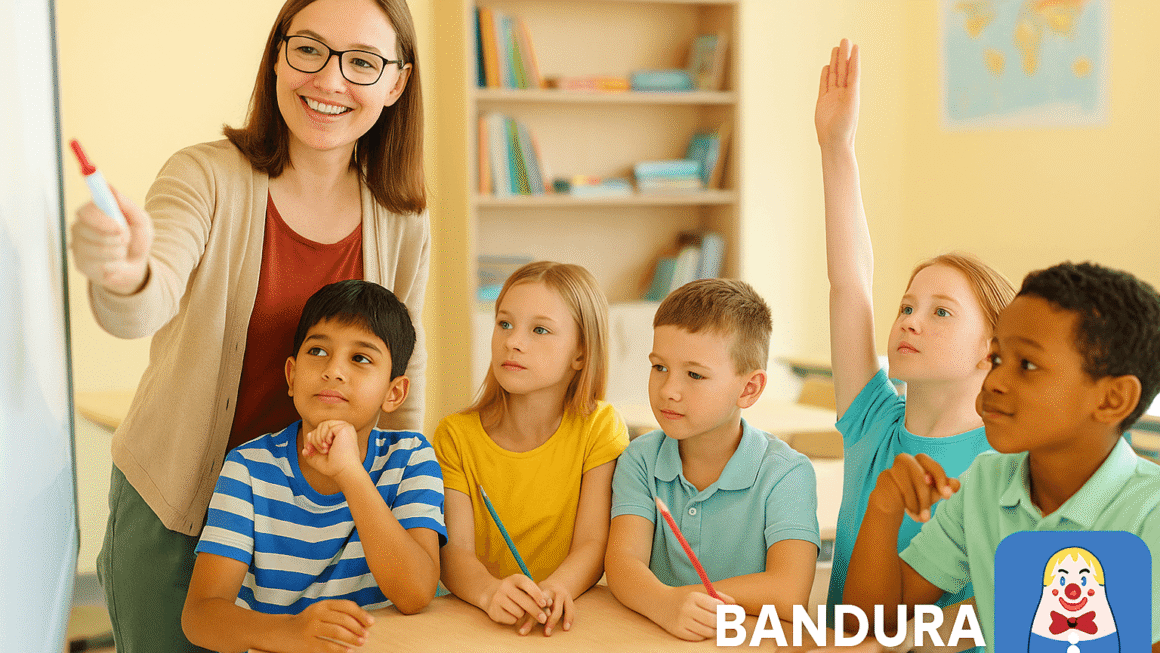
then Albert Bandura explains how children learn by watching others.
This is one of the most practical and most tested theories in CTET — especially in CDP pedagogy questions.
📌 Bandura says:
“Children learn by observing, imitating, and modelling the behaviour of others.”
🎯 By the end of this post, you will clearly understand Bandura’s theory, classroom examples, the famous Bobo Doll experiment, and how CTET frames questions from it.
🔔 Exam Alert:
Bandura से पिछले 5 CTET पेपर में लगातार प्रश्न पूछे गए हैं।
Topics asked → Modelling, Imitation, Observational Learning, Bobo Doll, Role of Environment.
🧠 What is Bandura’s Social Learning Theory?
Bandura believed that children learn not only from direct experience, but from observing others.
This is called:
✔ Observational Learning
(Watching → Understanding → Imitating → Internalising)
Children observe:
- Parents
- Teachers
- Classmates
- Media characters
- Everyday models
and copy behaviours — good or bad.
🧩 Key Concepts of Bandura (CTET Super Important)
| Concept | Meaning | CTET Classroom Example |
| Modelling | Children copy behaviour of a role model | Child copies how teacher speaks politely |
| Imitation | Repeating what is seen or heard | Student imitates peer’s handwriting style |
| Attention | Child must focus on model | Child observes teacher solving sums step-by-step |
| Retention | Remembering the behaviour | Child recalls steps during homework |
| Reproduction | Ability to perform behaviour | Student tries the same method while solving next sum |
| Motivation | Child imitates if rewarded/praised | Student repeats neat work when appreciated |
CTET Tip:
📌 Imitation = copying; Modelling = process of learning by observing a model.
🧸 The Bobo Doll Experiment – The Most Famous Study in CTET
Bandura’s classic experiment showed that:
✔ Children imitate aggressive behaviour
✔ even if they don’t receive any reward
✔ just by watching an adult model behave aggressively.
Bobo Doll = बड़ा फुलाया हुआ खिलौना (punching doll)
What happened?
- Adult hit the doll → kicked, punched, shouted.
- Children watched.
- Later children repeated the same aggressive acts on the doll.
📌 Conclusion:
Kids learn behaviour patterns by observing adults — good or bad.
This is why CTET emphasizes teacher behaviour as a powerful influence.
👩🏫 Classroom Implications (CTET Pedagogy Angle)
✔ 1. Teachers should behave as positive role models
Children copy tone, values, habits, work style.
✔ 2. Use peer modelling
Make confident students demonstrate tasks.
✔ 3. Avoid punishment-based learning
Children may copy aggressive behaviour.
✔ 4. Encourage cooperative group learning
Students learn socially from each other.
✔ 5. Demonstration method is highly effective
Show → Do → Practice → Feedback.
CTET Example:
“A student learns handwriting by watching the teacher.”
→ Bandura: Modelling
🎯 Don’t Confuse: Bandura vs Skinner
| Bandura | Skinner |
| Social learning | Operant conditioning |
| Learning by watching | Learning by reward/punishment |
| Model–based | Trial–error based |
| Focus on behaviour + cognition | Focus only on behaviour |
| Bobo Doll | Reinforcement |
Many CTET questions try to confuse these — stay alert.
🧵 Memory Trick – “A R R M I B”
Remember the steps of Observational Learning:
A – Attention
R – Retention
R – Reproduction
M – Motivation
I – Imitation
B – Bandura
Or remember as:
“AR Re MI Bandura” → sounds like a song 🎵
🧩 Mini Quiz – Test Your Concept
- Bandura’s theory focuses on—
a) Trial & error b) Observational learning c) Maturation d) Moral development
✔ उत्तर: b) Observational learning - Imitation happens when—
a) Child experiments independently
b) Child copies what he sees
c) Teacher punishes child
d) Child learns through repetition
✔ उत्तर: b) Child copies what he sees - Bobo Doll experiment proved—
a) Reward increases learning
b) Behaviour is inborn
c) Children imitate aggression
d) Children learn only by doing
✔ उत्तर: c) Children imitate aggression - A student copies the teacher’s way of reading. This is—
a) Reinforcement b) Modelling c) Exploration d) Conditioning
✔ उत्तर: b) Modelling - In observational learning, which step means remembering the behaviour?
a) Attention b) Retention c) Motivation d) Reproduction
✔ उत्तर: b) Retention
🧩 Final Takeaway
Bandura reminds teachers of a powerful truth:
📌 “Children learn more from what we do than what we say.”
Your voice, your tone, your behaviour —
all become models children imitate.
A smart CTET teacher ensures:
- Positive modelling
- Supportive environment
- Group learning
- Demonstration-based teaching
💬 Inspire. Model. Lead.
Stay Concept-Strong. Stay Certified. #CTETSmart
हिंदी संस्करण (Hindi Version)
नीचे पूरे लेख का हिंदी अनुवाद पढ़ें –
बांडूरा का सामाजिक अधिगम सिद्धांत – CTET नोट्स (Modelling, Imitation & Bobo Doll)
CTET के लिए सबसे व्यावहारिक अधिगम सिद्धांत – आसान भाषा में उदाहरणों सहित
🌟 संक्षिप्त परिचय
Piaget हमें बताता है कि बच्चे कैसे सोचते हैं…
Vygotsky बताता है कि वे दूसरों से कैसे सीखते हैं…
और Albert Bandura बताता है कि
📌 बच्चे दूसरों को देखकर, नकल करके और मॉडल से सीखते हैं।
CTET में यह सिद्धांत सबसे अधिक पूछा जाने वाला टॉपिक है — खासकर CDP और Pedagogy में।
📌 Bandura का मुख्य विचार:
“बच्चे अवलोकन (observing) से सीखते हैं, न कि केवल अनुभव से।”
🎯 इस पोस्ट में आप Bandura का सिद्धांत, कक्षानुमा उदाहरण, Bobo Doll प्रयोग, और CTET के महत्वपूर्ण प्रश्न समझेंगे।
🔔 Exam Alert:
पिछले 5 CTET पेपर में Bandura पर कम से कम 1–2 प्रश्न पूछे गए हैं।
🧠 बांडूरा का सामाजिक अधिगम सिद्धांत क्या है?
Bandura के अनुसार—
बच्चे प्रत्यक्ष अनुभव से ही नहीं, बल्कि दूसरों को देखकर सीखते हैं।
इस प्रक्रिया को कहा गया है:
✔ Observational Learning (अवलोकन आधारित अधिगम)
➡ देखना → समझना → याद रखना → नकल करना → सीखना
बच्चे सीखते हैं:
- माता-पिता से
- शिक्षकों से
- सहपाठियों से
- टीवी/मोबाइल किरदारों से
- आसपास के मॉडल से
🧩 Bandura के मुख्य सिद्धांत (CTET में बहुत महत्वपूर्ण)
| सिद्धांत | अर्थ | CTET उदाहरण |
|---|---|---|
| Modelling (मॉडलिंग) | मॉडल के व्यवहार की नकल करना | बच्चा शिक्षक के बोलने का तरीका कॉपी करता है |
| Imitation (अनुकरण) | देखे हुए व्यवहार को दोहराना | बच्चा सहपाठी की हैंडराइटिंग कॉपी करता है |
| Attention (ध्यान) | मॉडल पर फोकस करना | बच्चा शिक्षक को गणित के स्टेप्स ध्यान से देखता है |
| Retention (स्मरण) | व्यवहार को याद रखना | बच्चा वही स्टेप्स होमवर्क में याद करता है |
| Reproduction (पुनरुत्पादन) | वही काम करने की क्षमता | बच्चा अगला सवाल उसी तरीके से हल करने की कोशिश करता है |
| Motivation (प्रेरणा) | प्रशंसा/प्रोत्साहन मिलने पर दोबारा करना | प्रशंसा मिलने पर बच्चा फिर से साफ-सुथरा काम करता है |
📌 CTET टिप:
Imitation = सीधी नकल
Modelling = मॉडल को देखकर सीखने की प्रक्रिया
🧸 Bobo Doll प्रयोग – CTET में सबसे प्रसिद्ध अध्ययन
Bandura का यह प्रयोग सिद्ध करता है:
✔ बच्चे आक्रामक व्यवहार भी नकल कर लेते हैं
✔ सिर्फ देखने से
✔ बिना किसी इनाम के
Bobo Doll = बड़ा फुलाया हुआ पंचिंग खिलौना
प्रयोग में क्या हुआ?
- वयस्क ने गुड़िया को मारा, धक्का दिया, चिल्लाया
- बच्चों ने यह देखा
- बाद में बच्चों ने उसी आक्रामक व्यवहार को दोहराया
📌 निष्कर्ष:
बच्चे व्यवहार (behaviour patterns) को देखकर सीखते हैं —
चाहे वह अच्छा हो या बुरा।
इसीलिए CTET में शिक्षक के आचरण को बहुत महत्वपूर्ण माना गया है।
👩🏫 कक्षा में Bandura के सिद्धांत का उपयोग (CTET Pedagogy दृष्टिकोण)
✔ 1. शिक्षक सकारात्मक रोल मॉडल बनें
बच्चे भाषा, आदतें, मूल्य—सब कॉपी करते हैं।
✔ 2. Peer Modelling का उपयोग करें
आत्मविश्वासी छात्र को कार्य का प्रदर्शन कराएँ।
✔ 3. दंड आधारित शिक्षा से बचें
बच्चे आक्रामकता भी नकल कर लेते हैं।
✔ 4. समूह कार्य को प्रोत्साहित करें
बच्चे एक-दूसरे से सीखते हैं।
✔ 5. Demonstration Method सबसे प्रभावी
दिखाएँ → करवाएँ → अभ्यास कराएँ → प्रतिक्रिया दें
CTET उदाहरण:
“एक बच्चा शिक्षक की तरह पढ़ने की शैली अपनाता है।”
✔ उत्तर → Modelling
🎯 Don’t Confuse: Bandura vs Skinner
| Bandura | Skinner |
|---|---|
| सामाजिक अधिगम | ऑपरेटेंट कंडीशनिंग |
| दूसरों को देखकर सीखना | इनाम/दंड से सीखना |
| मॉडल आधारित | परीक्षण-त्रुटि आधारित |
| संज्ञानात्मक + व्यवहारिक | केवल व्यवहारिक |
| Bobo Doll प्रयोग | Reinforcement |
🧵 Memory Trick – “A R R M I B”
Observational Learning के 6 चरण याद रखने का तरीका:
A – Attention (ध्यान)
R – Retention (स्मरण)
R – Reproduction (पुनरुत्पादन)
M – Motivation (प्रेरणा)
I – Imitation (अनुकरण)
B – Bandura
इसे ऐसे याद रखें:
“AR Re MI Bandura” → गाने जैसा लगता है 🎵
🧩 Mini Quiz – अपनी समझ जाँचें
- बांडूरा का सिद्धांत किस पर आधारित है?
a) Trial & error b) Observational learning c) Maturation d) Moral development
✔ उत्तर: b) Observational learning - अनुकरण (Imitation) कब होता है?
a) जब बच्चा खुद प्रयोग करे
b) जब बच्चा देखा हुआ व्यवहार कॉपी करे
c) जब शिक्षक दंड दे
d) जब बच्चा दोहराव करे
✔ उत्तर: b) - Bobo Doll प्रयोग से क्या सिद्ध हुआ?
a) इनाम सीखने को बढ़ाता है
b) व्यवहार जन्मजात है
c) बच्चे आक्रामकता की नकल करते हैं
d) बच्चे केवल करके सीखते हैं
✔ उत्तर: c) - बच्चा शिक्षक की पढ़ने की शैली कॉपी करता है। यह क्या है?
a) Reinforcement b) Modelling c) Exploration d) Conditioning
✔ उत्तर: b) - Observational Learning में ‘Retention’ का अर्थ है—
a) ध्यान देना
b) याद रखना
c) प्रयास करना
d) प्रेरणा मिलना
✔ उत्तर: b)
🧩 Final Takeaway (अंतिम सार)
Bandura हमें याद दिलाते हैं:
📌 “बच्चे हमारी कही हुई बात से कम, और की हुई क्रिया से ज्यादा सीखते हैं।”
इसलिए एक CTET शिक्षक को चाहिए—
- सकारात्मक रोल मॉडल बने
- समूह अधिगम को बढ़ावा दें
- व्यवहार प्रदर्शित करके सिखाएँ
- सहयोगी वातावरण बनाएँ
💬 Inspire. Model. Lead.
Stay Concept-Strong. Stay Certified. #CTETSmart