
Identify, Understand & Support Children with Learning Challenges in the Classroom
🌟 Short Introduction
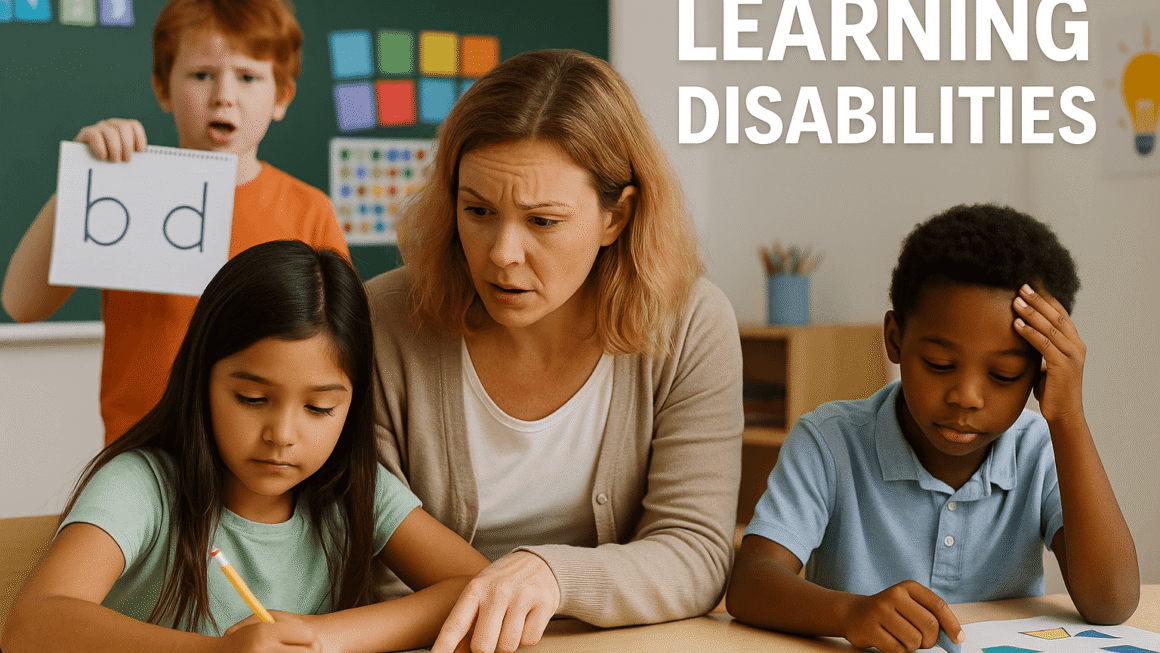
Many children struggle with reading, writing, or math — and these struggles are often mistaken as carelessness, low ability, or lack of attention.
❌ But the child is not “slow.”
✔ They may simply have a Learning Disability (LD).
CTET regularly asks 3–4 questions on LD — especially symptoms, differences, and classroom strategies.
🎯 This post explains Dyslexia, Dysgraphia, and Dyscalculia in simple language with clear teacher-friendly examples and CTET-focused points.
🧠 What Are Learning Disabilities?
Learning Disabilities are conditions that affect a child’s ability to:
- Read
- Write
- Spell
- Understand numbers
- Process information
BUT…
👉 Their intelligence (IQ) is completely normal.
This is the most important CTET point.
🧩 Three Major Learning Disabilities – CTET Quick Table
| LD Type | Affects What? | Key Symptoms | CTET Classroom Example |
| Dyslexia | Reading | Letter reversals, difficulty decoding, slow reading | Child reads “was” as “saw” |
| Dysgraphia | Writing | Poor handwriting, spelling issues, messy writing | Child writes “school” as “scol” |
| Dyscalculia | Mathematics | Number confusion, symbol errors, weak concepts | Child mixes 6 & 9 or + & – |
🔍 Detailed Understanding with Classroom Insight
1️⃣ Dyslexia – Reading Disability
Children struggle with:
- Letter–sound connection
- Word recognition
- Reading fluency
- Reversing letters or words
Classroom Example:
Child reads “from” as “form.”
2️⃣ Dysgraphia – Writing Disability
Children face difficulty in:
- Handwriting
- Spelling
- Sentence organization
- Writing speed (tires quickly)
Classroom Example:
Child writes “beautiful” as “butifl”.
3️⃣ Dyscalculia – Maths Disability
Common difficulties:
- Number concepts
- Counting
- Basic operations
- Sequencing
- Recognising symbols
Classroom Example:
Child confuses 13 with 31 or writes 6 instead of 9.
⚠️ Don’t Confuse: Learning Disability (LD) vs Intellectual Disability (ID)
This is one of CTET’s favourite confusion points.
| Learning Disability (LD) | Intellectual Disability (ID) |
| Only specific learning areas affected | Overall intellectual functioning affected |
| IQ is normal | IQ is lower than average |
| Skills improve with support | Slow progress across all areas |
| Difficulty in reading/writing/math | Difficulty in reasoning, communication, daily life |
📌 CTET Tip:
LD ≠ ID
LD ≠ Slow learner
LD ≠ Carelessness
👩🏫 Classroom Strategies (CTET Pedagogy Perspective)
✔ 1. Use Multisensory Learning
Let children learn using:
👀 seeing + 👂 hearing + ✍ writing + 🗣 speaking
✔ 2. Break tasks into small steps
Use micro-learning for reading, writing, and math.
✔ 3. Use visual aids
Flashcards, colored markers, charts, phonics tools.
✔ 4. Give positive reinforcement
Appreciate effort → builds confidence.
✔ 5. Allow alternative assessments
- Oral responses
- Reduced writing work
- Project-based tasks
✔ 6. Avoid comparing children
Each learns at their own pace.
CTET Example:
“Which method helps children with LD?”
→ Multisensory approach
🧵 Memory Trick – “R W M”
A quick way to remember the 3 types:
R = Reading → Dyslexia
W = Writing → Dysgraphia
M = Math → Dyscalculia
👉 R–W–M = Learning Disabilities
🧩 Mini Quiz – Test Your Concept
- Dyslexia is related to—
a) Writing b) Reading c) Maths d) Attention
✔ Answer: b) Reading - “school → scol” is an example of—
a) Dyslexia b) Dysgraphia c) Dyscalculia d) ADHD
✔ Answer: b) Dysgraphia - Difficulty with number concepts is called—
a) Dyslexia b) Dysgraphia c) Dyscalculia d) Autism
✔ Answer: c) Dyscalculia - In LD, the child’s IQ is—
a) Low b) Borderline c) Normal d) Above average only
✔ Answer: c) Normal - Which method is best for LD learners?
a) Punishment-based
b) Memorization-only
c) Multisensory learning
d) Competitive tests
✔ Answer: c) Multisensory learning
🧩 Final Takeaway
Learning Disabilities do not reflect a child’s intelligence —
they simply show different ways of learning.
A great CTET teacher:
- Supports with patience
- Uses multisensory strategies
- Gives flexible assessments
- Builds confidence
- Avoids labels & comparisons
💬 Understand the child. Adapt the teaching.
Stay Concept-Strong. Stay Certified. #CTETSmart
हिंदी संस्करण (Hindi Version)
नीचे पूरे लेख का हिंदी अनुवाद पढ़ें –
Learning Disabilities – Dyslexia, Dysgraphia & Dyscalculia (CTET सम्पूर्ण गाइड)
सीखने में कठिनाई वाले बच्चों को पहचानें, समझें और सही रणनीतियों से सहयोग दें
🌟 संक्षिप्त परिचय
कई बच्चे पढ़ने, लिखने या गणित में संघर्ष करते हैं—
और अक्सर इसे लापरवाही, कमज़ोरी या ध्यान न देने की समस्या मान लिया जाता है।
❌ सच यह है कि बच्चा “धीमा” नहीं है।
✔ उसे Learning Disability (LD) हो सकती है।
CTET में LD पर हर साल 3–4 प्रश्न पूछे जाते हैं—
ख़ासकर लक्षण, अंतर और कक्षा रणनीतियों पर।
🎯 इस पोस्ट में Dyslexia, Dysgraphia और Dyscalculia को आसान भाषा, स्पष्ट उदाहरणों और CTET-केंद्रित बिंदुओं के साथ समझाया गया है।
🧠 Learning Disabilities क्या होती हैं?
Learning Disabilities वे स्थितियाँ हैं जिनमें बच्चे को—
- पढ़ने
- लिखने
- वर्तनी
- संख्याएँ समझने
- जानकारी प्रोसेस करने
में कठिनाई होती है, लेकिन…
👉 उनकी बुद्धिमत्ता (IQ) सामान्य होती है।
यही CTET के लिए सबसे महत्वपूर्ण बिंदु है।
🧩 तीन प्रमुख Learning Disabilities – CTET त्वरित सारणी
| Learning Disability | किस क्षेत्र को प्रभावित करती है | मुख्य लक्षण | CTET Classroom उदाहरण |
|---|---|---|---|
| Dyslexia | Reading | अक्षर उल्टा-पुल्टा पढ़ना, धीमी पढ़ाई, शब्द पहचान में कठिनाई | बच्चा “was” को “saw” पढ़ देता है |
| Dysgraphia | Writing | खराब हैंडराइटिंग, स्पेलिंग गलती, लिखते समय थकान | बच्चा “school” को “scol” लिखता है |
| Dyscalculia | Mathematics | संख्याओं में भ्रम, चिन्हों की गलती, गणितीय concepts कमजोर | बच्चा 6 और 9 या + और – में गलती करता है |
🔍 Detail में समझें (कक्षा के वास्तविक उदाहरणों सहित)
1️⃣ Dyslexia – पढ़ने में कठिनाई (Reading Disability)
बच्चे को कठिनाई होती है:
- अक्षर–ध्वनि पहचान में
- शब्दों को डिकोड करने में
- पढ़ने की गति में
- अक्षर/शब्द उल्टा पढ़ने में
कक्षा उदाहरण:
बच्चा “from” को “form” पढ़ देता है।
2️⃣ Dysgraphia – लिखने में कठिनाई (Writing Disability)
बच्चे को परेशानी होती है:
- हैंडराइटिंग में
- वर्तनी में
- वाक्य व्यवस्थित लिखने में
- लिखते समय थकान महसूस करना
कक्षा उदाहरण:
बच्चा “beautiful” को “butifl” लिख देता है।
3️⃣ Dyscalculia – गणित में कठिनाई (Math Disability)
बच्चा संघर्ष करता है:
- संख्याओं की समझ में
- गिनती में
- जोड़–घटाव में
- गणितीय चिन्ह पहचानने में
- संख्या क्रम याद रखने में
कक्षा उदाहरण:
बच्चा 13 को 31 पढ़ता है या 6 को 9 लिख देता है।
⚠️ Don’t Confuse: Learning Disability (LD) vs Intellectual Disability (ID)
CTET में यह भ्रम बार-बार पूछा जाता है।
| Learning Disability (LD) | Intellectual Disability (ID) |
|---|---|
| केवल सीखने का एक क्षेत्र प्रभावित | संपूर्ण बौद्धिक विकास प्रभावित |
| IQ सामान्य | IQ औसत से कम |
| सही रणनीति से सुधार संभव | प्रगति धीमी रहती है |
| पढ़ना/लिखना/गणित प्रभावित | सभी कौशल प्रभावित |
📌 CTET Tip:
LD ≠ ID
LD ≠ Slow Learner
LD ≠ लापरवाही
👩🏫 Classroom Strategies (CTET Pedagogy Perspective)
✔ 1. बहु-संवेदी (Multisensory) शिक्षण
देखकर + सुनकर + बोलकर + लिखकर → सीखना आसान।
✔ 2. छोटे चरणों में सीखने के लक्ष्य दें
Micros-steps सबसे प्रभावी होते हैं।
✔ 3. Visual aids का उपयोग
Flashcards, colors, charts, phonics tools।
✔ 4. सकारात्मक प्रतिक्रिया (Positive Reinforcement)
बच्चे के आत्मविश्वास में बड़ा सुधार होता है।
✔ 5. वैकल्पिक मूल्यांकन
- मौखिक उत्तर
- कम लिखावट वाले कार्य
- प्रोजेक्ट आधारित मूल्यांकन
✔ 6. तुलना न करें
हर बच्चा अपनी गति से सीखता है।
CTET Example:
“LD वाले बच्चों के लिए कौन-सी विधि सबसे उपयोगी है?”
✔ Multisensory method
🧵 Memory Trick – “R W M”
तीन प्रकार ऐसे याद रखें:
R = Reading → Dyslexia
W = Writing → Dysgraphia
M = Maths → Dyscalculia
👉 R–W–M = Learning Disabilities
🧩 Mini Quiz – अपनी समझ जाँचें
- Dyslexia किससे संबंधित है?
a) Writing b) Reading c) Mathematics d) Attention
✔ उत्तर: b) Reading - “school → scol” किसका उदाहरण है?
a) Dysgraphia b) Dyslexia c) Dyscalculia d) Autism
✔ उत्तर: a) - संख्याओं/चिन्हों में भ्रम किसमें होता है?
a) Dyslexia b) Dysgraphia c) Dyscalculia d) ADHD
✔ उत्तर: c) - LD में बच्चे का IQ कैसा होता है?
a) कम b) औसत से नीचे c) सामान्य d) केवल उच्च
✔ उत्तर: c) - LD वाले छात्रों के लिए सबसे उपयोगी विधि कौन-सी है?
a) दंड आधारित
b) रटने वाली
c) Multisensory learning
d) प्रतियोगी परीक्षण
✔ उत्तर: c)
🧩 Final Takeaway
Learning Disabilities कमजोरी नहीं होती—
ये सिर्फ सीखने के अलग-अलग तरीकों को दर्शाती हैं।
एक अच्छा CTET शिक्षक:
- धैर्य रखता है
- सही रणनीति अपनाता है
- Visual व multisensory तरीके उपयोग करता है
- बच्चों में आत्मविश्वास बनाता है
- तुलना नहीं करता
💬 बच्चों को समझें। सहयोग दें। आगे बढ़ाएँ।
Stay Concept-Strong. Stay Certified. #CTETSmart